my cart0

 Live Zoom Classes

Sort By:
Primary 5 English: Why It Gets Harder and How to Prepare Early for PSLE
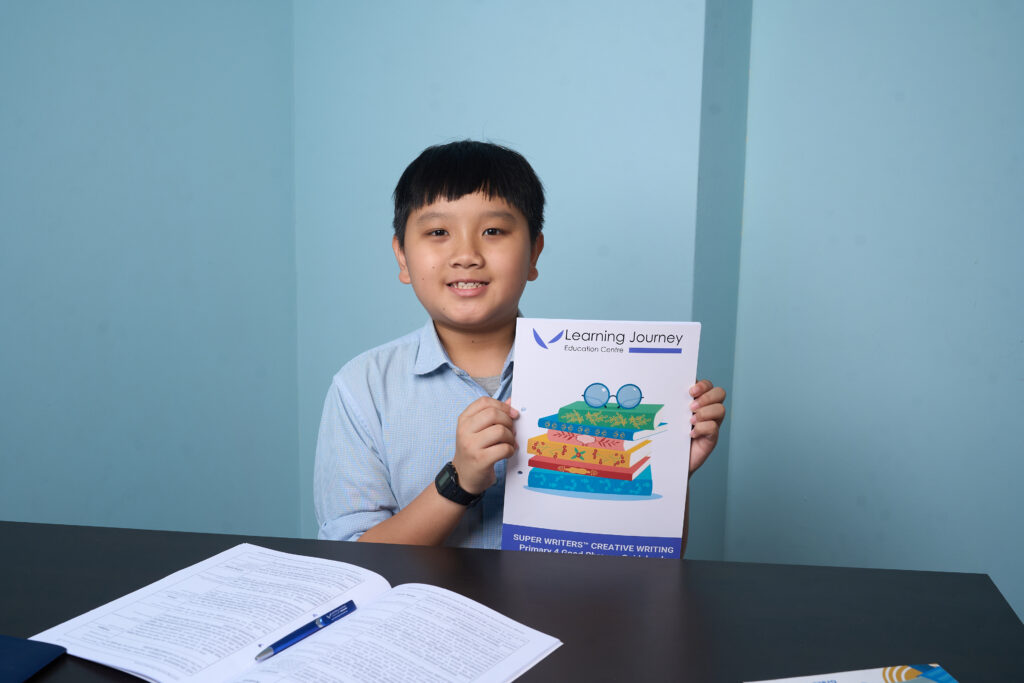
Your child did well for English at Primary 4. Then Primary 5 arrives, the marks slip, and nothing about their effort seems to have changed. If that sounds familiar, you are not imagining it, and your child has not suddenly become worse at English.
Primary 5 marks a turning point, with higher expectations and more demanding English questions. It is also the last full year before PSLE, which is what makes it the most valuable twelve months in your child’s primary English journey. Everything examined at PSLE is introduced or deepened here. A student who arrives in Primary 6 with these skills already in place spends that year sharpening. A student who does not spends it catching up, with the exam already in sight.
This guide covers what actually changes in Primary 5 English, why it feels so abrupt, and how to use the year before PSLE properly.
Why Primary 5 English Gets Harder: The Curriculum Shift
Primary 5 is not just a step up from Primary 4. Students are expected to think more deeply and apply their English skills more independently.
Primary 4 builds foundations. Simple narrative writing, comprehension that asks what happened, grammar taught in isolation. Primary 5 assumes those foundations are in place and starts building analysis and reasoning on top of them.
Three things change at once, which is why the impact feels sudden:
Writing moves from telling to reasoning. A story is no longer enough. Students are expected to show planning, control structure deliberately, and choose vocabulary for effect rather than convenience.
Comprehension moves from finding to inferring. Answers are no longer simply sitting in the passage waiting to be copied out. Students have to work out what is implied.
Oral moves from personal experience to opinion. Conversation topics start touching on current affairs and real-world issues, and a child who only knows how to describe their own weekend may struggle to explain what they think and why.
Students who got through Primary 4 on effort and neatness often struggle here, not because they have weak English, but because nobody has explicitly taught them the new skills. Schools frequently assume students will work it out. Many do not.
👉See how our curriculum builds these skills
P5 English Composition: From Storytelling to Structured Writing
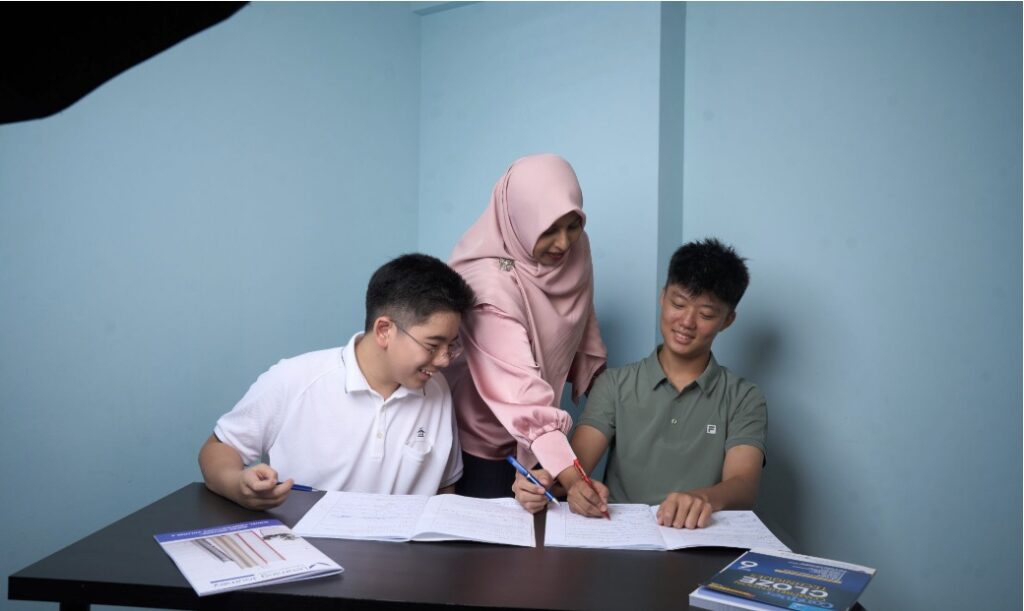
Composition is usually where parents notice the change first.
Vocabulary expectations rise. Simple verbs stop earning marks. “He went” needs to become something that carries tone and intent. Students who have not been building a working bank of expressions find themselves writing the same twelve words in every piece.
Structure becomes explicit. Introductions and conclusions are assessed, not just present. Paragraphs need a purpose. Markers look for signs that the piece was planned before it was written.
Situational writing enters the picture. This component asks for a different voice entirely. A letter to a friend and a letter of complaint use different registers, and students have to switch deliberately between them. It catches out strong storytellers who have never had to write in a formal voice.
Primary 5 composition topics get more demanding. They shift from “write about your holiday” towards prompts that need deeper reflection and judgement.
Common Primary 5 composition topics
- Overcoming a challenge, learning from a mistake, an act of courage
- Environmental and community themes such as conservation or volunteering
- School and friendship situations involving a decision or conflict
- Situational writing tasks such as formal letters and persuasive pieces
The gap here is rarely ability. It is that these techniques are seldom taught step by step, and a child cannot apply a structure nobody has shown them.
Comprehension Becomes Analytical, Not Just Copy and Paste
In Primary 4, comprehension asks what happened. In Primary 5, it asks why it happened, what it reveals about a character, and what the writer wanted the reader to feel.
Passages get longer. Vocabulary gets more abstract. Most importantly, the answers stop being visible on the page.
Skills your child now needs:
- Reading implied meaning rather than stated meaning
- Working out why a character behaved as they did
- Tracing cause and effect across a longer text
- Comparing viewpoints within the same passage
- Answering in their own words rather than lifting phrases
This is the area where anxiety builds fastest, because a child who used to score well by reading carefully now finds careful reading is not enough. Comprehension also takes the longest to rebuild, which is a strong argument for starting in Primary 5 rather than Primary 6.
Primary 5 English Oral Practice: The Most Overlooked Component

Here is something many parents have yet to realise. From 2025 onwards, PSLE English Oral is worth 40 marks, which is 20% of the English paper, up from 15%. Reading Aloud accounts for 15 of those marks and the Stimulus-Based Conversation accounts for 25.marks
That makes oral one of the most heavily weighted components in the subject, and the one families most often leave until Primary 6.
Primary 5 is when oral practice should become regular rather than occasional. Effective practice covers:
Reading aloud with meaning. Not just accurate words, but phrasing and expression that show the passage was understood. Punctuation has to be heard, not merely obeyed.
Stimulus-Based Conversation with real content.This is where a significant portion of the oral marks comes from.Students look at a visual, answer a question, then keep the conversation going through follow-ups. One-line answers cost marks quickly.
Exposure to model answers. Children cannot produce a standard they have never heard. Hearing strong responses trains both their ear and their vocabulary.
Confidence under mild pressure. Oral anxiety is common at this age and it responds well to structured, low-stakes repetition in a small group.
Most schools manage only a couple of oral sessions a term. That is not enough repetition to build fluency, which is why oral is usually the easiest place for a Primary 5 student to gain marks.
👉Download our free English practice materials for oral
Coping With Primary 5 English: Practical Strategies at Home
Parents often ask why their child suddenly finds English stressful when they were comfortable a year ago. The honest answer is that the standard rose on purpose. Your child’s ability did not fall.
Things that genuinely help:
Show them the marking criteria. Children guess what teachers want far more than adults realise. Being told explicitly what earns marks removes a surprising amount of anxiety.
Prioritise feedback over volume. One composition properly marked and discussed teaches more than five written and left in a file. Unmarked practice tends to reinforce whatever the student is already doing wrong.
Normalise the difficulty. Saying plainly that Primary 5 is harder by design, and that it is meant to prepare them for PSLE, helps a child interpret the struggle as expected rather than as failure.
Build a reading habit that includes non-fiction. News and factual writing feed the vocabulary and background knowledge that oral and comprehension now demand. Fiction alone will not cover it.
Start a storyline bank. A handful of adaptable personal experiences, prepared and reusable, cuts composition panic dramatically. The same story about overcoming a setback can be reshaped for many prompts.
Do the building work now. Strategies applied in Primary 5 mean Primary 6 becomes refinement. Left until Primary 6, the same work has to happen under exam pressure.
Starting PSLE Preparation in Primary 5: Why the Year Before Matters
Preparing for PSLE in Primary 5 may sound early. In practice it is simply using the time that exists.
There is room to build progressively. Starting in Primary 5 means skills can be developed in sequence rather than compressed into a final-year sprint.
Weak areas surface while they are still fixable. If comprehension is shaky, Primary 5 gives you months to rebuild it properly. The same discovery in Primary 6 becomes a scramble.
Habits compound. Disciplined practice, asking for feedback, regular reading. These take a term or two to establish, then keep paying off right through PSLE.
The mindset shifts. Students who understand they are already preparing tend to approach work more deliberately, without the panic that comes from a sudden Primary 6 realisation.
What Primary 5 PSLE preparation should include
- Structured composition practice, every piece marked and discussed
- Weekly oral practice covering both Reading Aloud and Stimulus-Based Conversation
- Comprehension work focused on inference and answering in one’s own words
- Grammar and vocabulary targeted at exam requirements rather than general revision
- Regular timed practice so exam conditions stop feeling unfamiliar
How Learning Journey Supports Primary 5 English Students
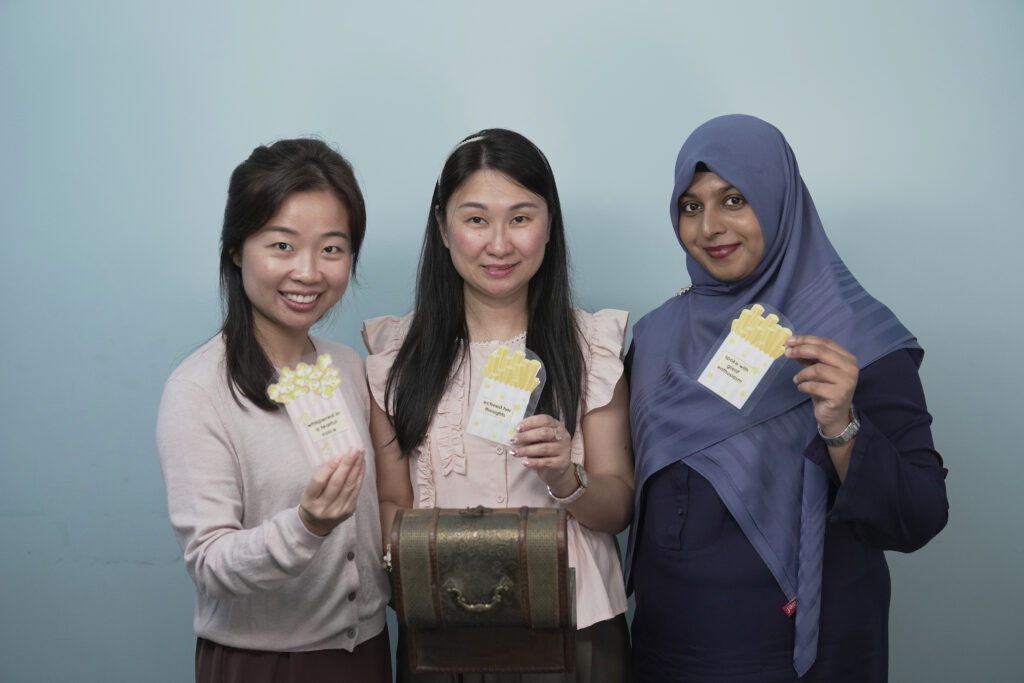
Small classes, capped at 8 students. A teacher can diagnose whether a child is losing marks to vocabulary, structure, confidence or comprehension only if they can actually watch that child work. In a class of thirty, that is not possible. In a class of eight, it is routine.
Every piece of written work is marked and discussed. Written feedback plus a verbal walkthrough, so your child understands not only what was wrong but why the correction works.
Proprietary Super Writers™ Framework. We teach composition using our own structured methodology, not generic composition templates. Your child learns the reasoning behind effective writing, not just formulas to memorise.
Current-affairs-driven curriculum. Lessons draw on real events and issues, which is exactly the content oral conversations and reflective compositions now require. Students build genuine opinions to draw on rather than rehearsed lines.
Structured stimulus-based oral mock practice. Planned practice incorporated into our lessons, with oral mock practice to help students develop their responses, express opinions and handle follow-up questions with greater confidence.
Curriculum built on years of PSLE trend analysis. Our English curriculum is led by Principal Grace, author of 9 best-selling English assessment books with more than 100,000 copies sold in POPULAR Bookstores, and 9 years of analysing PSLE and O-Level English trends.
In both 2025 and 2026, we spotted the PSLE Composition questions and Oral topics, all of which had been covered in our P6 curriculum earlier in the year!
Learning Journey has been featured on The Straits Times, Lianhe Zaobao, Talking Point and Nas Daily.
2025 PSLE English Results –
⭐ 2 in 3 students scored AL1–AL4
⭐ Nearly 1 in 2 achieved AL1–AL2
⭐ 90% achieved at least a 2-grade improvement
👉Explore our Primary & PSLE English Tuition programme
Frequently Asked Questions About Primary 5 English
Should my child start tuition in Primary 5 or wait until Primary 6?
Primary 5 is the better starting point. It leaves room to build skills in order and to fix weak areas before the exam year. Students who begin in Primary 6 are often learning new techniques and revising at the same time, which is a difficult way to work.
How often should my child do oral practice?
Weekly, at minimum. Oral is a performance skill, so it responds to frequent short repetition rather than occasional long sessions. Since oral is now 20% of PSLE English, weekly practice is well worth the time.
What’s the difference between school and Primary 5 English tuition?
Class size, mainly. School classes make individual marking and discussion of every piece impractical. In a class capped at 8, every composition can be marked, returned and talked through, and every student gets speaking time.
Is Primary 5 too early to start PSLE preparation?
No. Primary 5 covers the skills PSLE actually tests, so preparing in Primary 5 is really just learning the syllabus properly the first time. Early starters tend to arrive in Primary 6 calm.
My child struggles with comprehension. How long until we see improvement?
Inference skills usually take a few months of consistent weekly practice before the change is clearly visible. Progress feels slow at first because the child is learning to think differently, then it becomes noticeable across all their papers at once.
What are common Primary 5 composition topics?
Reflective personal experiences, environmental and community themes, school and friendship situations, and situational writing tasks such as formal letters. The trend is towards prompts requiring judgement rather than simple description.
Primary 5 Is the Year That Sets Up PSLE

The jump into Primary 5 English is real, and it is meant to be. It is the year MOE uses to prepare students for what PSLE will ask of them.
Which makes it an opportunity rather than a problem. Skills built now have a full year to settle before they are tested. Weak spots found now can still be fixed without pressure. And a Primary 5 student who learns how to plan, structure and speak with confidence walks into Primary 6 refining their work instead of rebuilding it.
If your child is finding this year harder than the last, that is the signal to act, not to wait.
👉Book a trial class and see how your child is doing
- Website:https://www.learningjourney.edu.sg/
- Phone: +65 9625 2102
Quick Contact
- WhatsApp: +65 9625 2102
- Primary Email: admin@learningjourney.edu.sg
Operating Hours:
- Monday-Thursday: 1-9PM
- Friday: 12-8PM
- Saturday-Sunday: 9-5 PM