my cart0

 Live Zoom Classes

Sort By:
Primary 4 English: What Changes in P4 and How to Help Your Child Keep Up
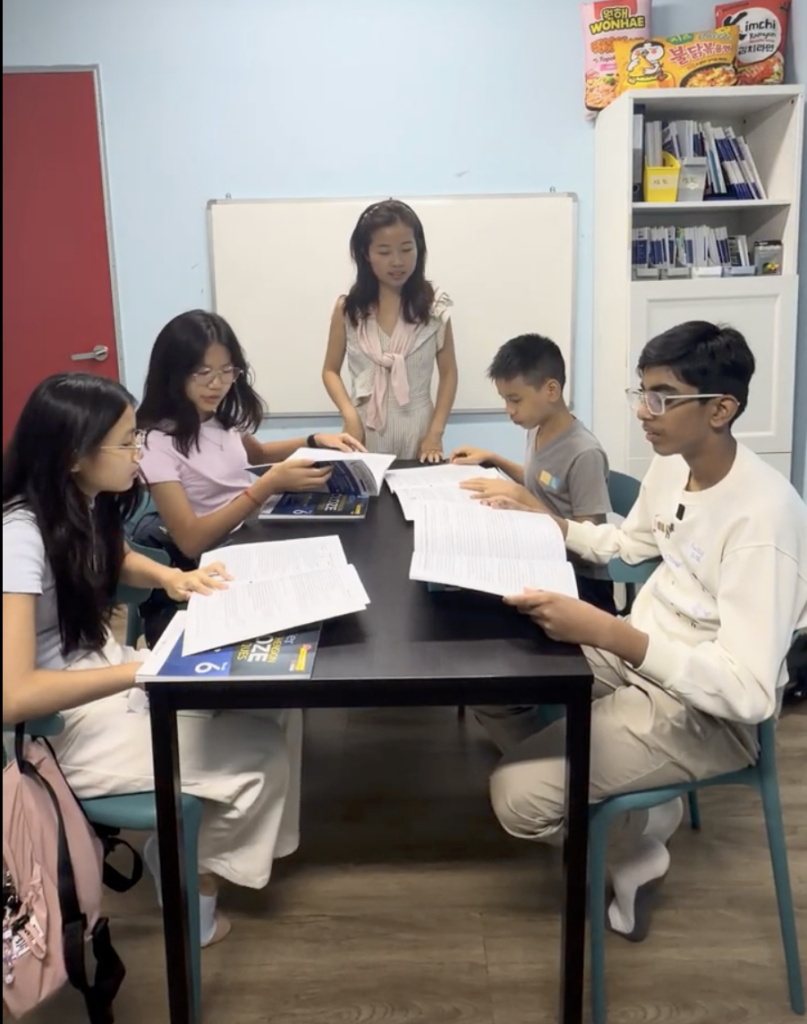
Primary 4 is the year a lot of parents get their first surprise.
The child who brought home comfortable English marks through Primary 1 to 3 suddenly comes back with something lower. Nothing about their attitude has changed. They are doing the homework. The marks still slipped.
What changed is the syllabus and expectations. Primary 4 is where English stops rewarding neat work and accurate spelling, and starts asking students to think. It is also the year that decides a great deal about what comes next, because Primary 4 results feed into the subject levels (foundation, standard English) your child takes from Primary 5 onwards.
This guide covers what actually changes in Primary 4 English, why the marks dip, and what helps at home.
Why Primary 4 English Feels Harder Than Primary 3
Lower primary English is mostly about accuracy. Spell correctly, write in full sentences, answer what the passage says. A careful child does well.
Primary 4 adds a second layer. Accuracy still matters, but now your child has to interpret, organise and explain. Those are different skills, and very few students pick them up on their own by simply trial and error.
Three shifts happen at roughly the same time, which is why the effect feels sudden rather than gradual.
Passages get longer and less obvious. Comprehension starts asking what a character felt or why something happened, rather than what took place.
Writing needs a plan. A story with a beginning, middle and end is no longer enough on its own. Markers look for a story flow with clear organisation, purposeful development and a well-planned storyline.
Speaking becomes an assessed skill. Oral moves beyond reading aloud with expression and responding to questions with relevant ideas and explanations.
A child who has been doing well through carefulness alone now needs a different set of habits. The difficulty is not that your child has suddenly become weaker at English. The expectations have changed.That is the whole story behind most Primary 4 grade dips.
What Changes in Primary 4 English Composition
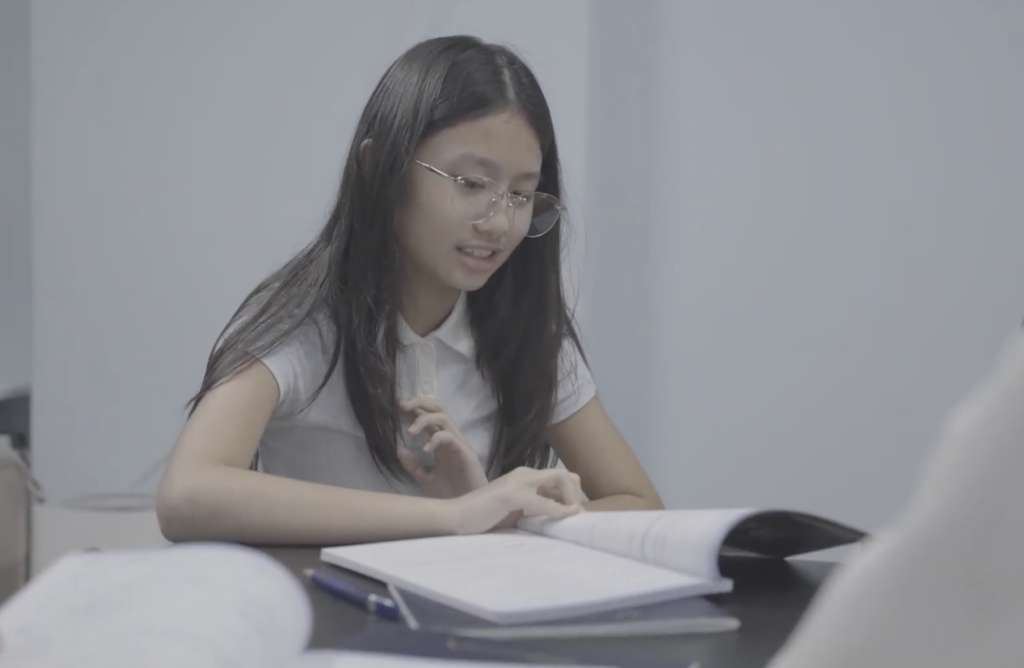
Composition is usually where the drop shows up first.
What Primary 4 Composition Marking Looks For
Planning becomes visible in the mark. Students who start writing immediately tend to produce stories that wander, run out of space, or end abruptly. Markers can tell. A short plan before writing is the single highest-return habit at this level.
Paragraphs need a job. Each one should move the story forward or develop something. Long unbroken blocks of text, or a new paragraph for every sentence, both cost marks.
Vocabulary is expected to work harder. Simple verbs like went, said and saw stop earning credit. Your child needs better alternatives (words like: sprint, dash, scurried, glanced) they can actually use, not a memorised list they never reach for.
Description has to carry feeling. Writing “he was scared” states an emotion. Writing “his hands shook as he reached for the handle” shows it. Upper primary marking rewards the second.
Common Primary 4 Composition Topics
Topics tend to centre on personal experiences, school incidents, acts of kindness or helpfulness, and simple moral situations. They are familiar on purpose. The challenge is not the topic, it is the structure and the language used to tell it.
What Helps at Home With Composition
Ask your child to think through the storyline and plan out loud before writing. Four sentences covering what happens at the start, what goes wrong, what they do about it, and how it ends. Five minutes of planning saves a whole composition from drifting out of point.
Primary 4 Comprehension: From Finding to Working Out
In Primary 3, the answer is usually somewhere in the passage, close to the words in the question. In Primary 4, it often is not.
Questions start asking:
- Why a character behaved a certain way
- How someone felt, when the passage never says so directly
- What a phrase means in the context it appears in
- What the writer wanted the reader to understand
This is inference, and it is the skill that takes the longest to build. It is also the one that quietly follows students all the way to PSLE, because comprehension carries weight in every upper primary paper.
Passages are often much longer and more complex than passages they encountered in Primary 3.
Where Marks Are Lost in Primary 4 Comprehension
Two habits cost marks here more than anything else:
Copying a chunk of the passage and hoping. Lifting a whole sentence rarely answers a “why” question, and markers award nothing for material that does not address what was asked.
Ignoring the mark allocation. A question worth two marks is asking for two separate points. Students give one, explain it at length, and lose the other mark without realising there was a second one available.
What Helps at Home With Comprehension
What helps at home: after your child answers a comprehension question, ask them which part of the passage made them think so. If they cannot point to it, they guessed. That one question, asked regularly, builds the habit of reasoning from evidence.
Primary 4 Oral: The Component Most Families Start Too Late
Oral tends to be the last thing families think about and the first thing that pays off when they do.
At Primary 4, oral work moves towards the format upper primary and PSLE use: reading a passage aloud with expression, then having a conversation about a visual prompt.
The conversation is the harder part. Children who are perfectly chatty at home often go quiet in front of a teacher, or answer in four words and stop.
Why Oral Is Worth Taking Seriously From Primary 4
From 2025 onwards, PSLE English Oral is worth 40 marks, which is 20% of the English paper, up from 15%. Reading Aloud accounts for 15 of those marks and the Stimulus-Based Conversation accounts for 25 marks. Starting at Primary 4 means your child has years of low-pressure practice rather than months of rushed preparation.
What Helps at Home With Oral
Ask open questions at dinner instead of yes or no ones. “What was the best part of today, and why?” invites a proper answer. Encourage a simple structure: make the point, explain, give an example, add an opinion. Children who are used to explaining their thinking out loud find oral exams far less intimidating.
👉Download our free English practice materials
Why Primary 4 Results Matter More Than Parents Expect
There is a practical reason Primary 4 gets attention that Primary 3 did not.
Under Subject-Based Banding, your child’s Primary 4 results help determine which subjects they take at Standard or Foundation level from Primary 5. This shapes their learning over the next two years and the level at which they sit for the PSLE.
This is not a reason to panic, and it is certainly not a reason to put pressure on a ten-year-old. It is a reason for parents to pay attention earlier than they might have planned to.A gap identified in Primary 4 is much easier to address. The same gap identified in Primary 6 becomes a bigger challenge, with the PSLE just months away.
Primary 4 is also the first of the three years that are actually built towards PSLE. Everything examined at PSLE is introduced, in simpler form, somewhere between Primary 4 and Primary 6.
How to Help Your Child Keep Up in Primary 4 English
Treat feedback as more valuable than volume. One composition that has been marked properly and reviewed one to one with the students with quality feedback teaches more than four written sloppily and filed away. Unmarked practice mostly reinforces whatever the student is already doing wrong.
Fix one thing at a time. If planning is the weakness, work on planning for a few weeks. If grammar is the issue, it MUST BE FIXED ASAP as it is the most basic requirement of a decent composition. Trying to correct everything at once overwhelms a child and slows progress.
Read widely, including non-fiction. Current affairs articles and news written for children, factual books and magazines build the vocabulary and general knowledge that oral conversations and reflective compositions both draw on. Fiction alone will not cover it. At Learning Journey, we use a well-received current affairs driven curriculum to encourage our students to include the latest viral news articles in their composition storylines and oral responses to impress markers.
Normalise the difficulty. Telling your child plainly that Primary 4 English is harder by design, and that finding it harder is expected, helps them read the struggle as normal rather than as failure.
Ask for their reasoning, not their answer. “Why did you choose that word?” and “Which part of the passage tells you that?” train self-checking, which is the skill that transfers into an exam hall where nobody is there to help.
How Learning Journey Supports Primary 4 Students
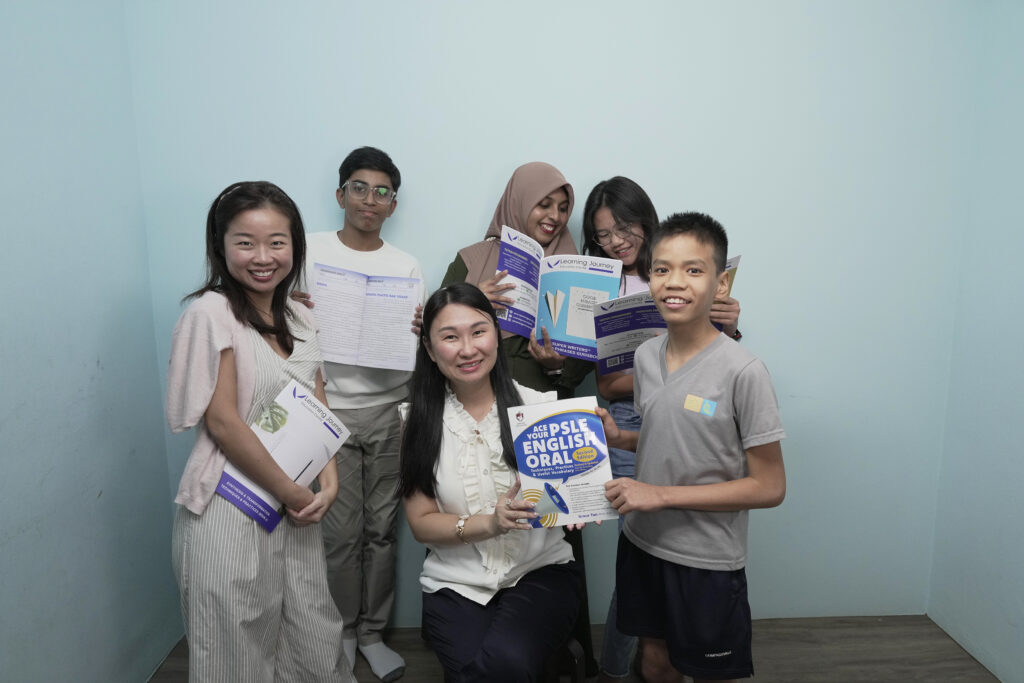
Small classes, capped at 8 students. A teacher can only work out whether a child is losing marks to vocabulary, structure, inference or confidence by watching that child work closely. Small classes make that possible as a matter of routine.
Every composition is marked and reviewed with each student. Written feedback plus a conversation about it, so your child understands why the mistakes are made, where to improve and how to do corrections and how not to make the same mistakes again.
Proprietary Super Writers™ Framework. We teach composition using our own structured methodology, not generic composition templates. Your child learns the reasoning behind effective writing, not just formulas to memorise.
Current-affairs-driven curriculum.Lessons draw on real-world events and issues, giving students relevant ideas and examples to draw on in oral conversations and compositions, rather than relying solely on memorised responses.
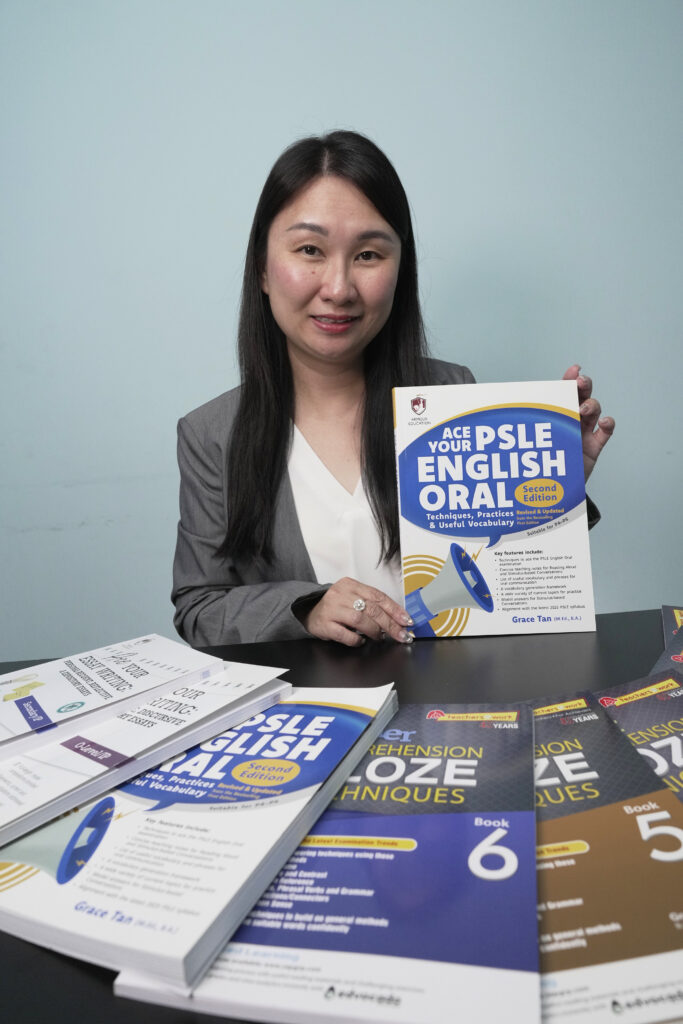
Curriculum built on years of PSLE trend analysis. Our English curriculum is led by Principal Grace, author of 9 best-selling English assessment books with more than 100,000 copies sold in POPULAR Bookstores, with 9 years of analysing PSLE and O-Level English trends. Learning Journey has been featured on The Straits Times, Channel 5 & 8, CNA938, Talking Point, Lianhe Zaobao and Nas Daily.
For 2025 PSLE English
⭐ 2 in 3 students scored AL1–AL4
⭐ Nearly 1 in 2 achieved AL1–AL2
⭐ 90% achieved at least a 2-grade improvement
👉Explore our Primary & PSLE English Tuition programme
Frequently Asked Questions About Primary 4 English
Why did my child’s English marks drop in Primary 4?
Because the syllabus started asking for different skills. Lower primary English rewards accuracy. Primary 4 adds more advanced vocabulary, inference, planning and explanation. A child who was doing well through carefulness alone now needs new habits, and very few pick those up without being taught them.
Is Primary 4 too early for English tuition?
No. Primary 4 is the first of the three years leading to PSLE, and it is the year subject-level decisions for Primary 5 are made. Starting here means having a longer runway for building crucial English skills steadily rather than correcting them under time pressure later.
What are common Primary 4 composition topics?
Relating Personal experiences, school incidents, helping others and simple moral situations (Being Responsible). The topics are deliberately familiar. What earns marks is the planning, structure, grammar and language used to tell the story.
How much oral practice does a Primary 4 student need?
Little and often works better than occasional long sessions. Oral is a performance skill, so short, regular practice builds fluency faster. Since PSLE Oral is now 20% of the English paper, starting the habit at Primary 4 is time well spent.
My child reads a lot but still struggles with comprehension. Why?
Reading builds vocabulary and familiarity, but comprehension marks come from answering the specific question asked, with the right number of points, using evidence from the passage. That is a technique, and it has to be taught separately from the reading habit.
Primary 4 Is the Year to Start, Not the Year to Worry
The jump in Primary 4 English is real, and it catches out capable children every year. It is also a good time to address these challenges because there is still plenty of time to build the necessary skills before PSLE.
Skills built now have two full years before PSLE because there is still plenty of time to build the necessary skills before PSLE. Gaps found now can be addressed before exam preparation becomes more intensive. And a child who learns to plan, infer and speak with confidence at Primary 4 is better prepared for the increased demands of Primary 5.
If this year has felt harder than the last, that is a sign to look closely, not to wait and see.
👉Book a trial class and see where your child stands
- Website:https://www.learningjourney.edu.sg/
- Phone: +65 9625 2102
Quick Contact
- WhatsApp: +65 9625 2102
- Primary Email: admin@learningjourney.edu.sg
Operating Hours:
- Monday-Thursday: 1-9PM
- Friday: 12-8PM
- Saturday-Sunday: 9-5 PM